Laminating the transom
A question in the style – a stick in the anthill.
Should you laminate a wooden hull?
Answer?
YES!
NO!
It depends…
So I’ll write a little more broadly what I personally think about such practices and what experiences I have.
It works best to laminate a new or solidly dried hull made of twill or plywood (plywood is also twill in a sense). The sheer diagonal stacking of planchets, plywood or veneers gives a rigid shell, which is further stiffened by the laminate veneer. Straw structures also lend themselves quite well to lamination. And we always use epoxy resin-based laminate for this purpose.
Once we received a new hull of a Colin Archer-type yacht made of two layers of overlapping planes (not diagonally only bow-to-rear) with a total thickness of about 50mm. Unfortunately, through years of downtime in the previous hangar, the wood had become severely weathered and the hull was cracking from wood shrinkage. In the end, the decision was made to laminate the hull. Due to. for the dimensions of the unit and the “working strength” of the plating, it was necessary to laminate the hull with a laminate about 4-5mm thick (about 4.5kg of glass per m2). This treatment completely protected the hull and ended the problems of splitting and “shooting” of the plating.
I have unfortunately seen yachts with contact plating which the laminate was supposed to save from leaks and the general poor condition of the hull. Usually damp, unprepared planking plans detach from the laminate and in the best case scenario we have a fuselage within a fuselage. In a worse… Leaky hull + splintered laminate with a hole on one of the rudder fittings, or another side passage…not recommended.
Even more difficult is the overlap sheathing, where the fabric “gets up” during lamination at each board joint…. not recommended. I know, there are patents, we use them ourselves sometimes when you need to laminate something difficult but…. I don’t recommend it.
Of course, you can treat the laminate as a temporary repair and according to the principle of emergency/temporary repairs “if it works it’s a good repair!”
After this long-winded introduction, it’s time for the work that recently fell into my hands.
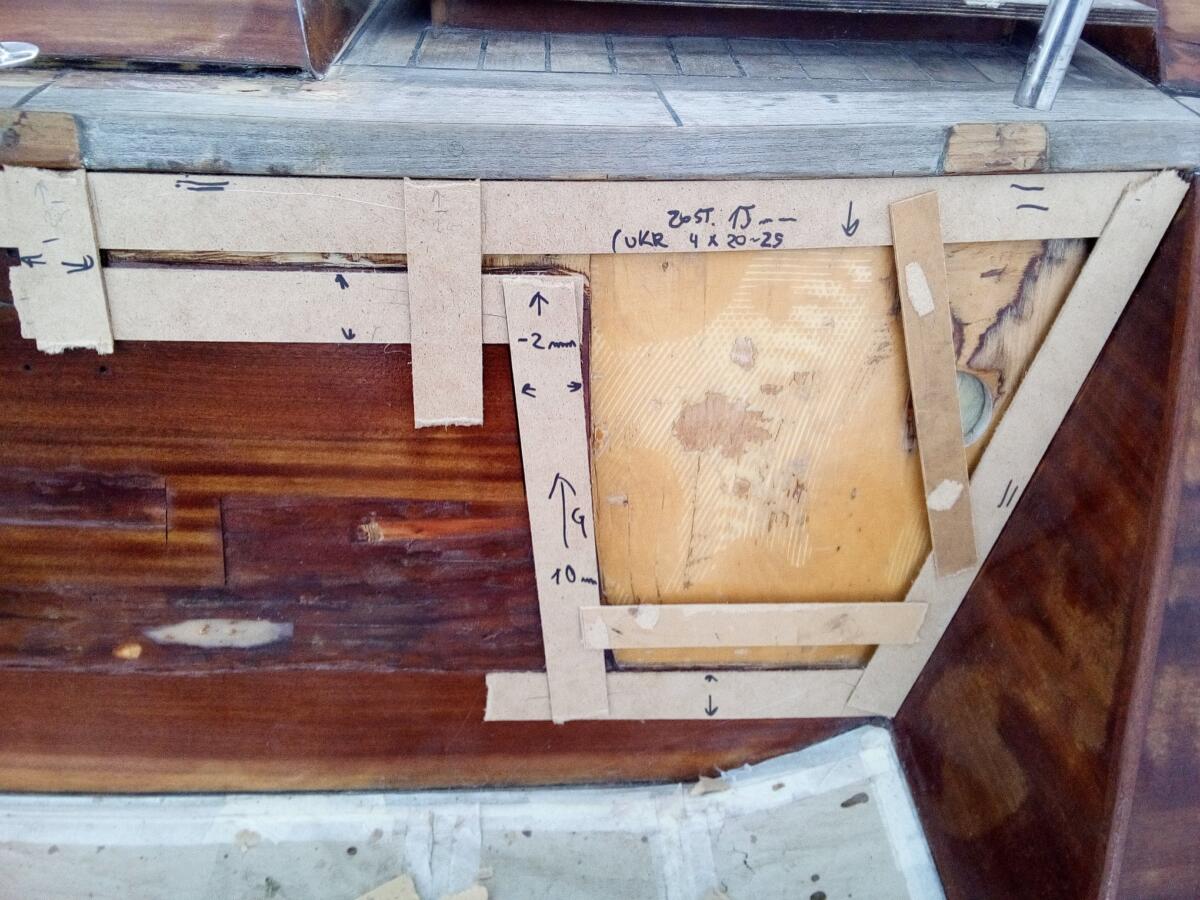
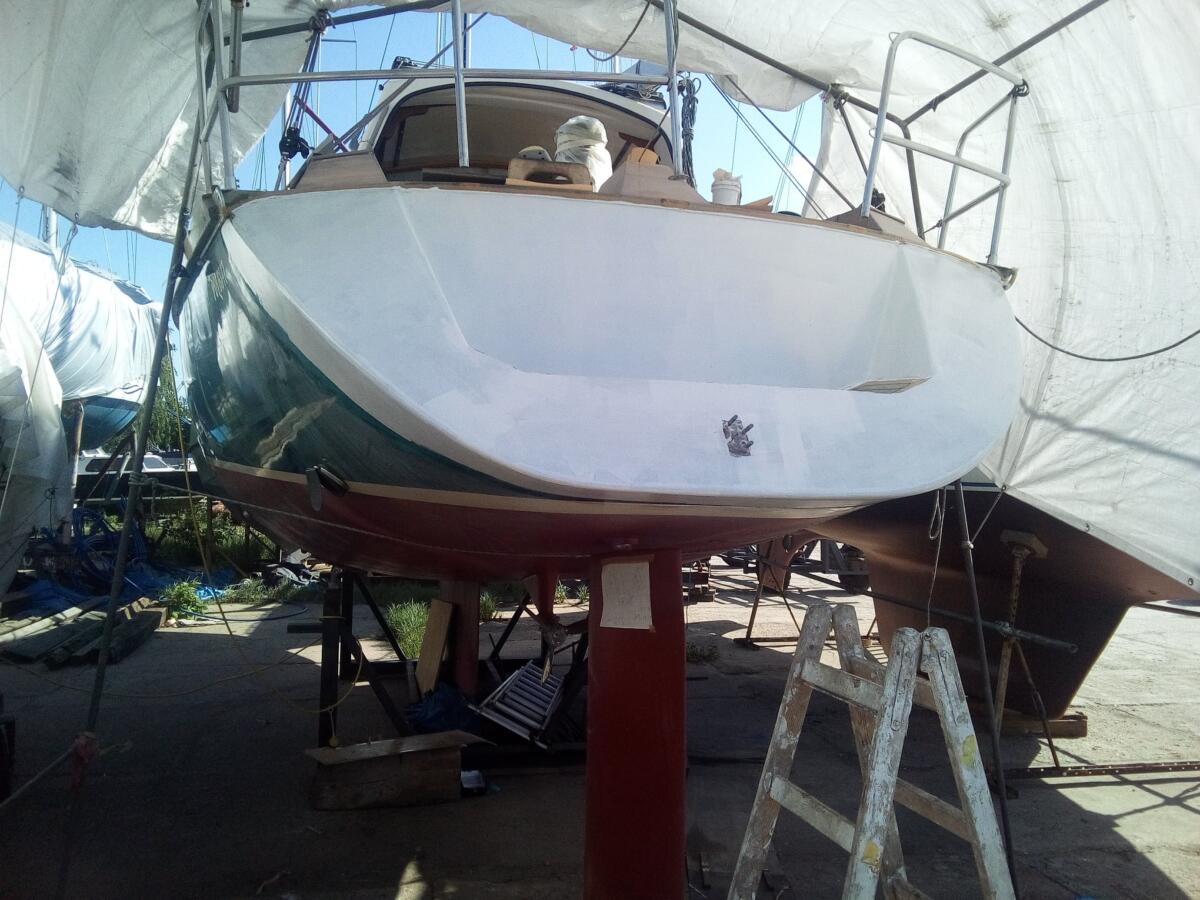
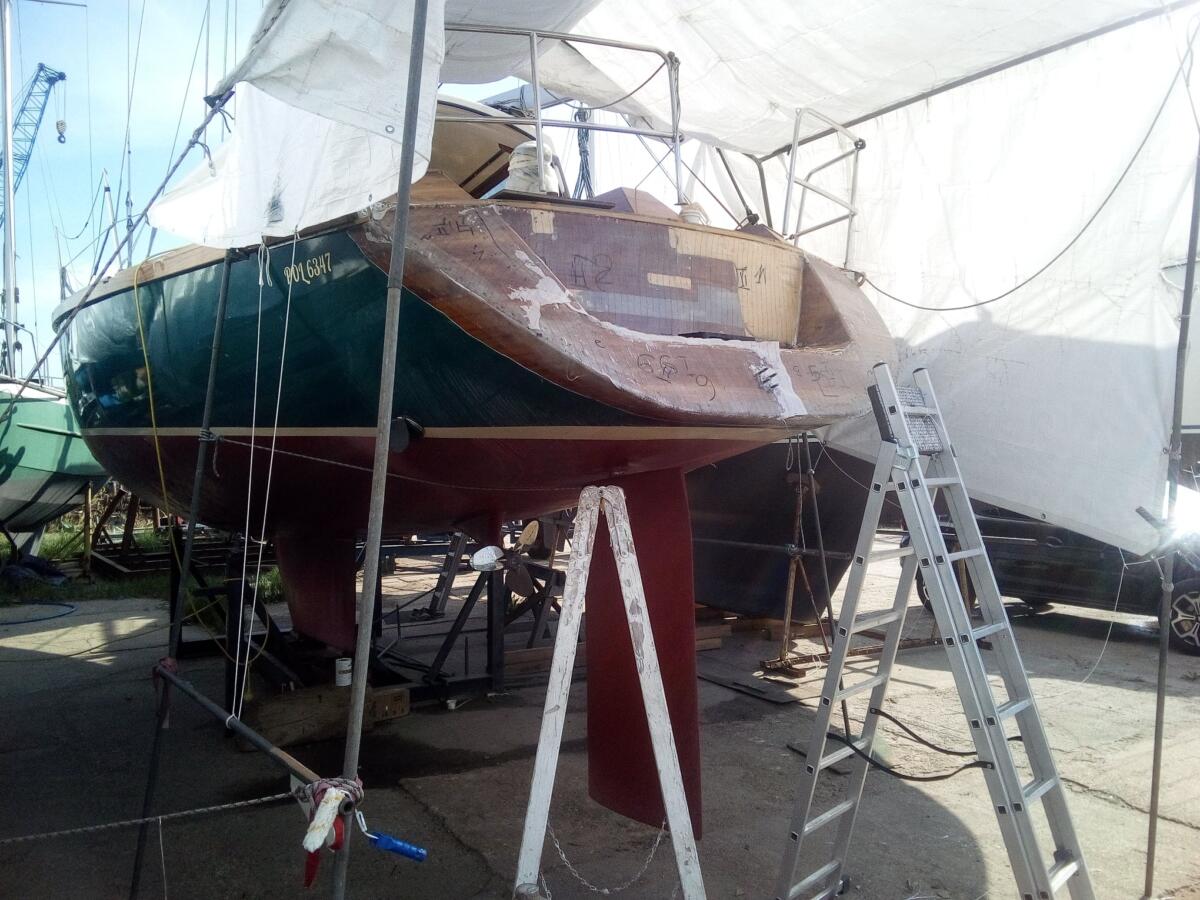
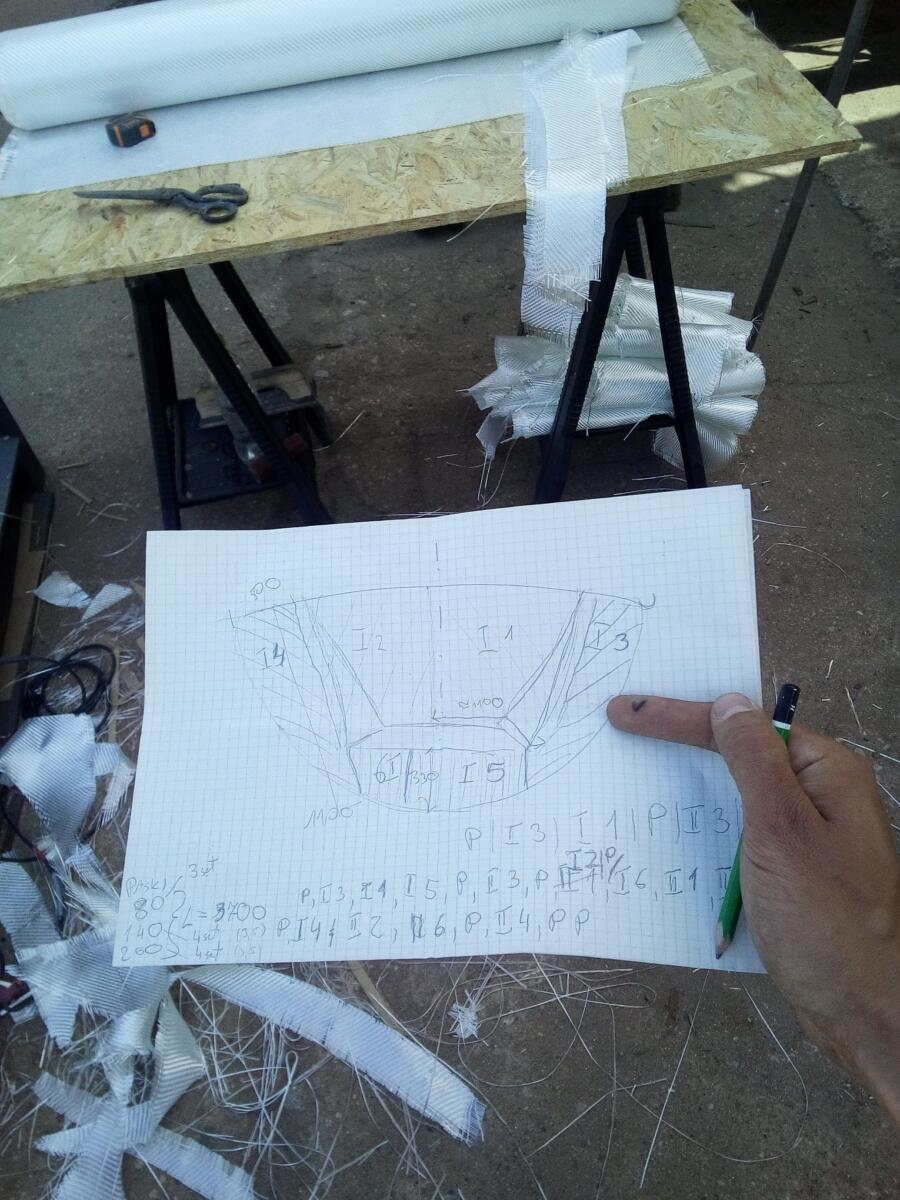
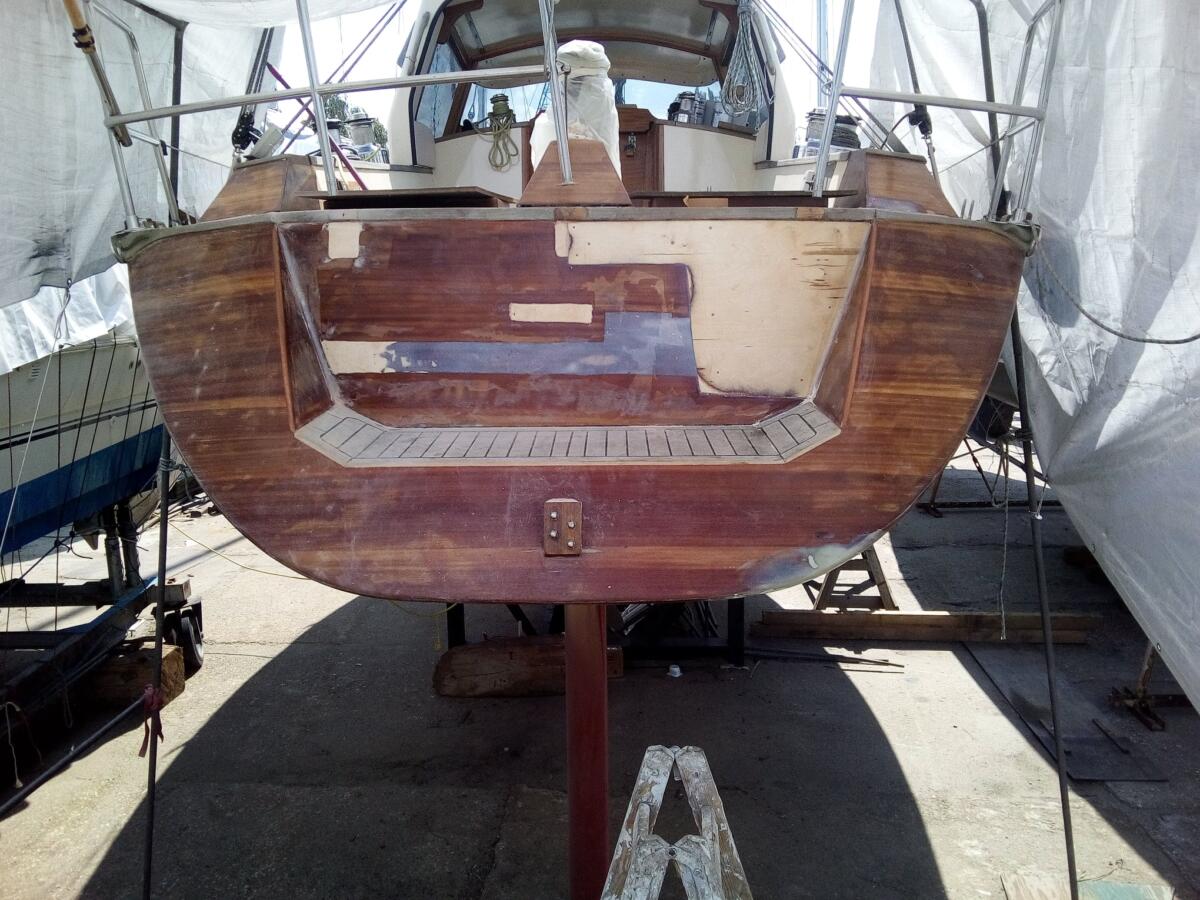
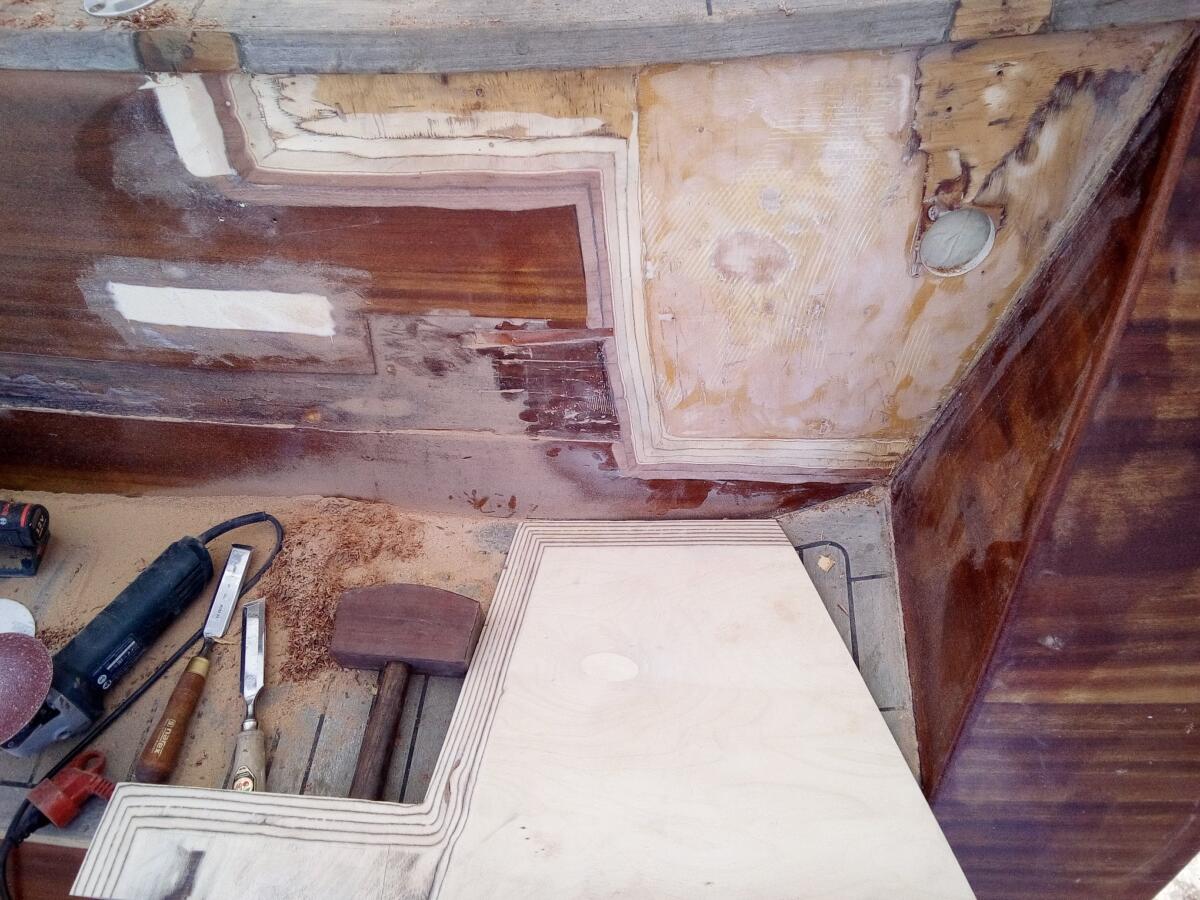
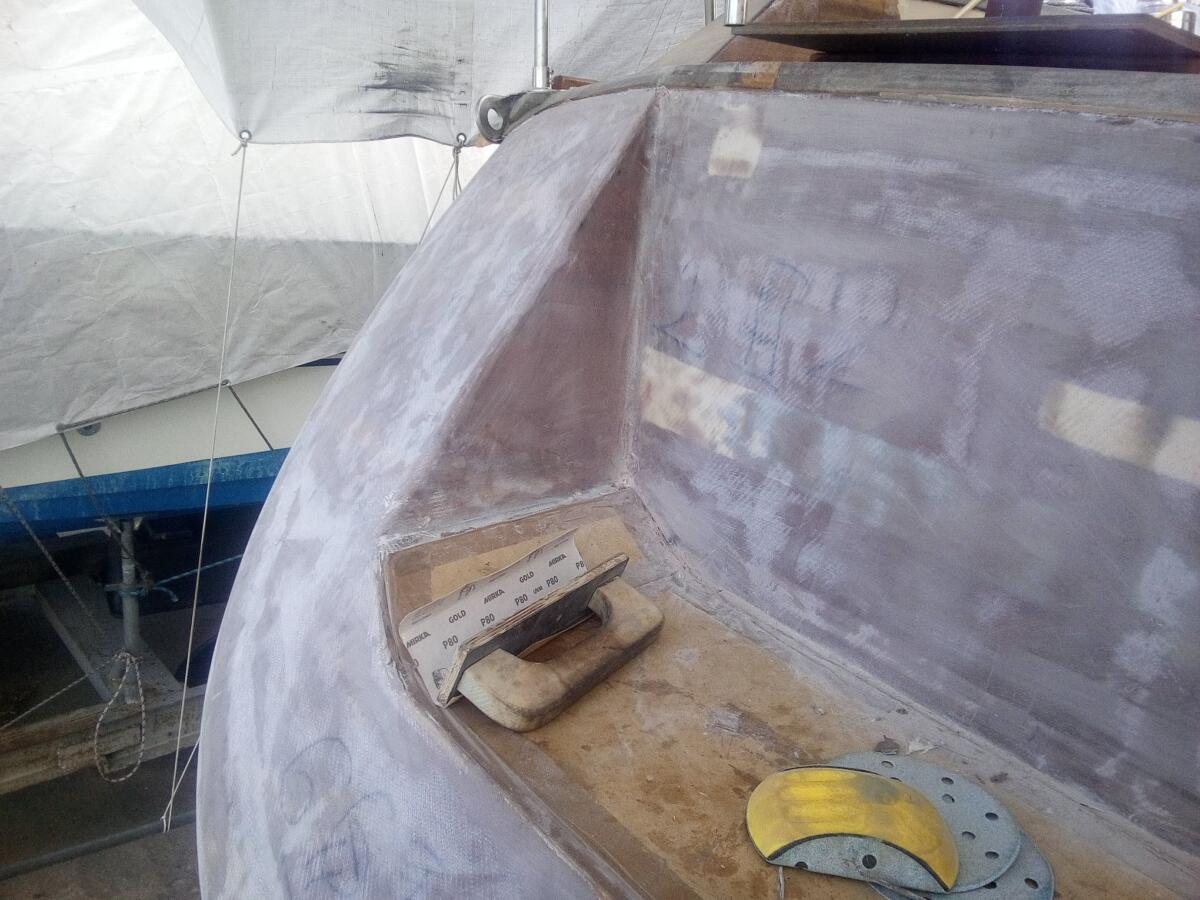
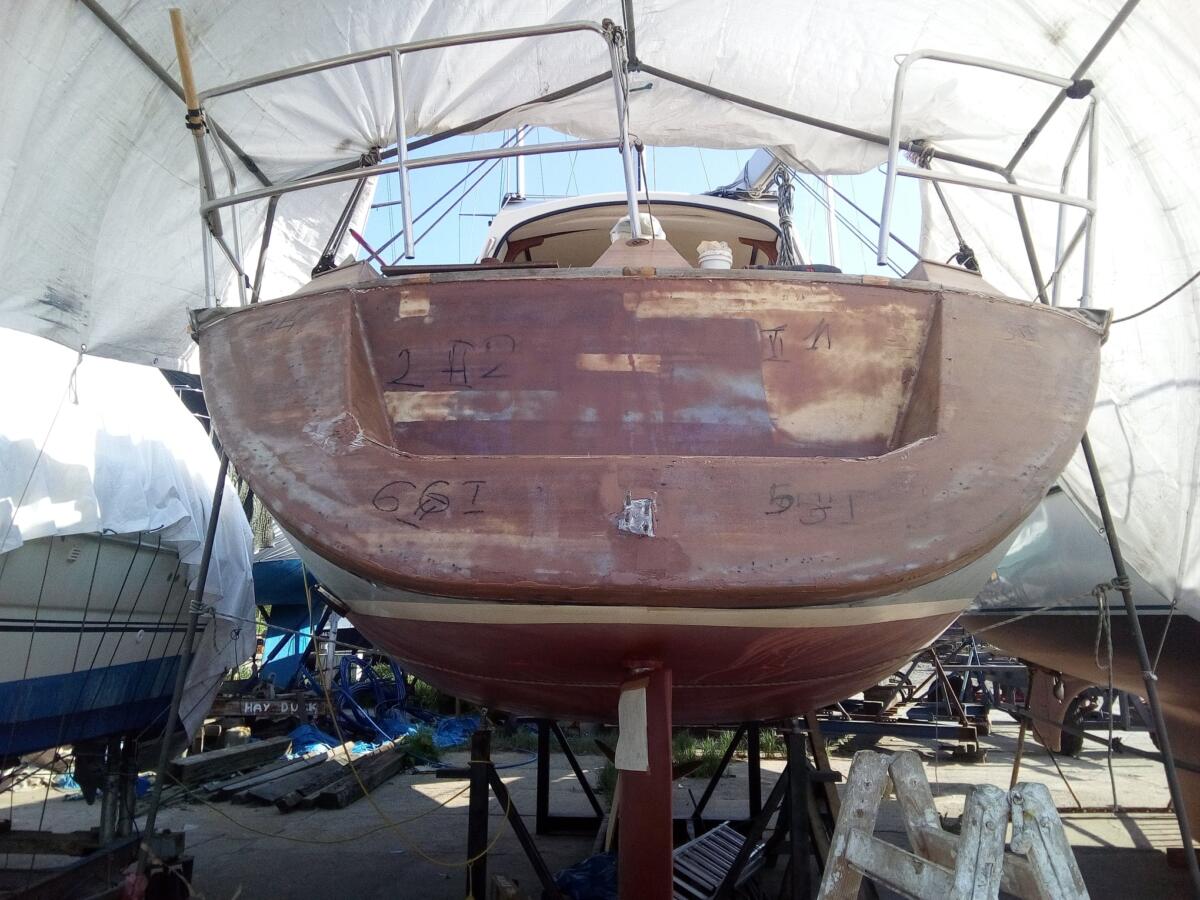
The transom was the only unlaminated element. Fuselage Made diagonally from 3 layers of plywood on the coping (there are such wonders). It was covered with thin (5mm) mahogany planking and varnished to a glossy finish. Unfortunately, the previous owner neglected to paint and seal the transom passage. It ended up with local damage and, at the point of transition, a lot of external degradation. w-plywood. Since the shipowner did not want to keep the wooden appearance of the transom but only an easy-to-maintain laminated surface then covered with paint, small cavities were filled in and a rebuild was done where the plywood w-wave was missing. Then, in accordance with the shipowner’s wishes, the transom was laminated with two wws of 350g/m2 roving and, at the connection with the side and bottom, additionally with another ww. The rest of the description next to the photos.