The plan was simple, but rather ambitious in its executionThe plan was simple, but rather ambitious in its executioThe plan was simple, but rather ambitious in its executionnThe plan was simple, but rather ambitious in its executionThe plan was simple, but rather ambitious in its execution.
- Fly out once more and make the yacht temporarily seaworthy.
- Sail across the Atlantic, through the North Sea and the Baltic, all the way to Szczecin.
- Carry out the permanent repairs at the good old Hangar, at 11 Przestrzenna Street.
- Set off on the round-the-world voyage that had been planned before the fire.
The first stage of this plan presented us with two challenges:
- Restore the yacht to a condition where she could be sailed without getting covered in soot and residue from the burnt surfaces, while also getting rid of at least some of the lingering smell of smoke.
- Reinforce the hull side so that neither a wave nor a fender pressing against the yacht alongside a quay could break through it.
The first challenge left us looking more like coal miners than boatbuilders. After just four days of scrubbing from dawn till dusk (and at these latitudes in January, that means roughly ten hours of daylight), we were more or less ready to apply two thick coats of epoxy paint to every burnt surface. Mahogany and white make a surprisingly good combination, and the interior no longer left us covered in soot.
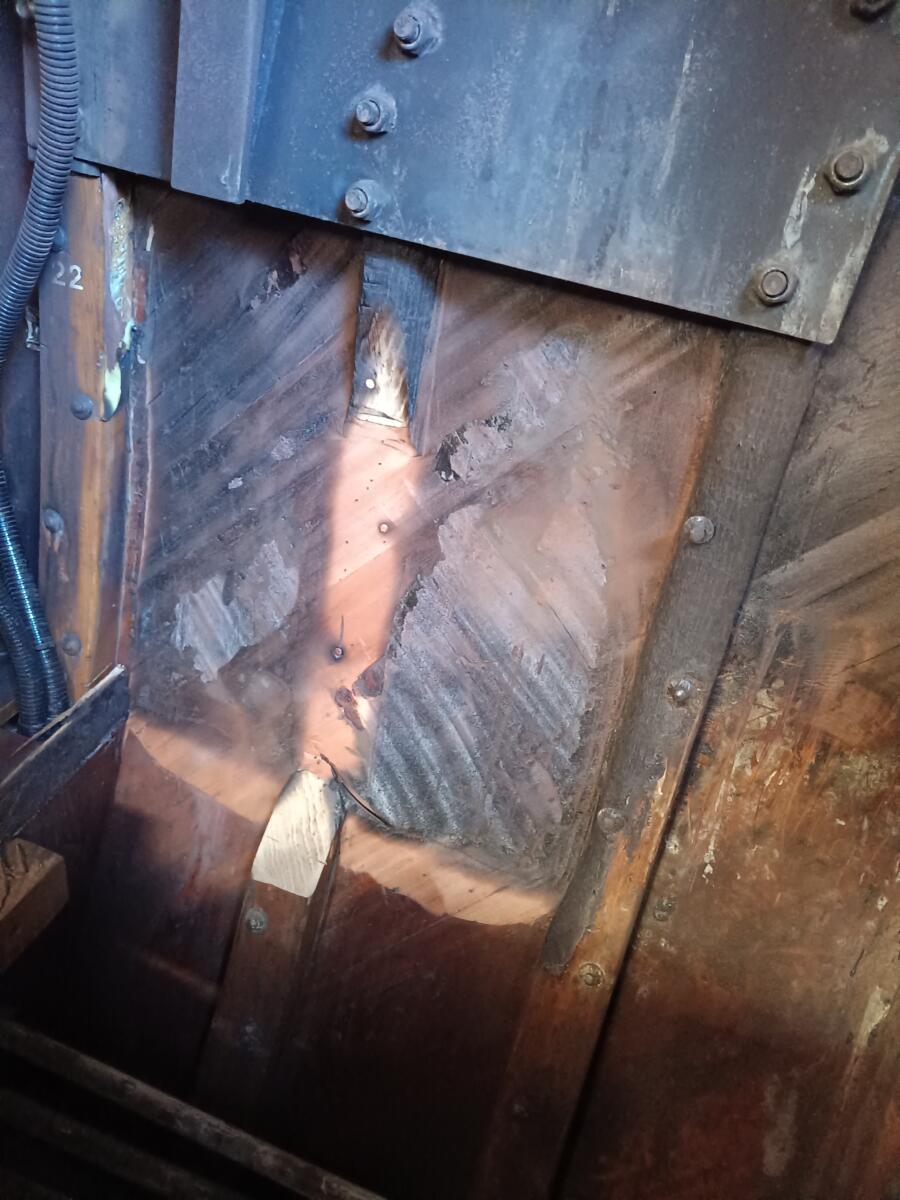
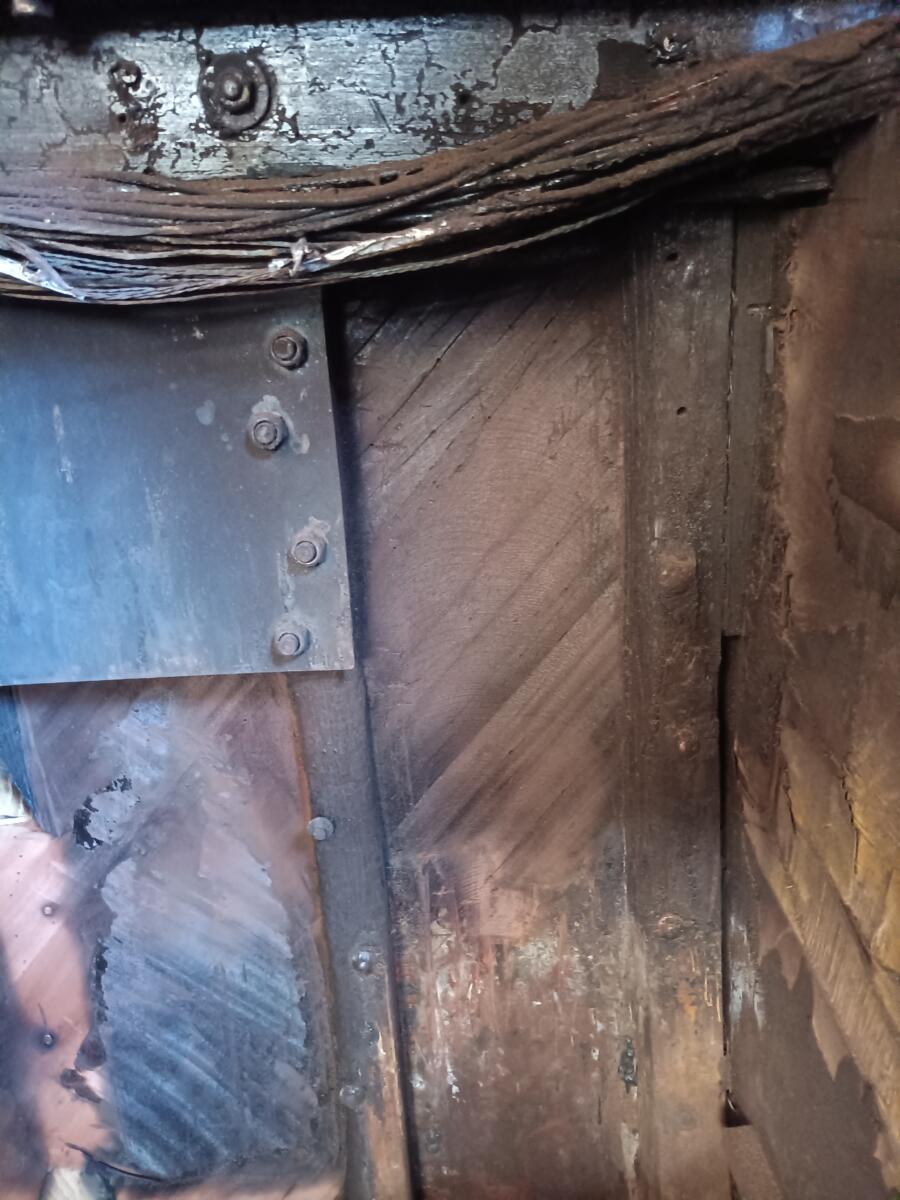
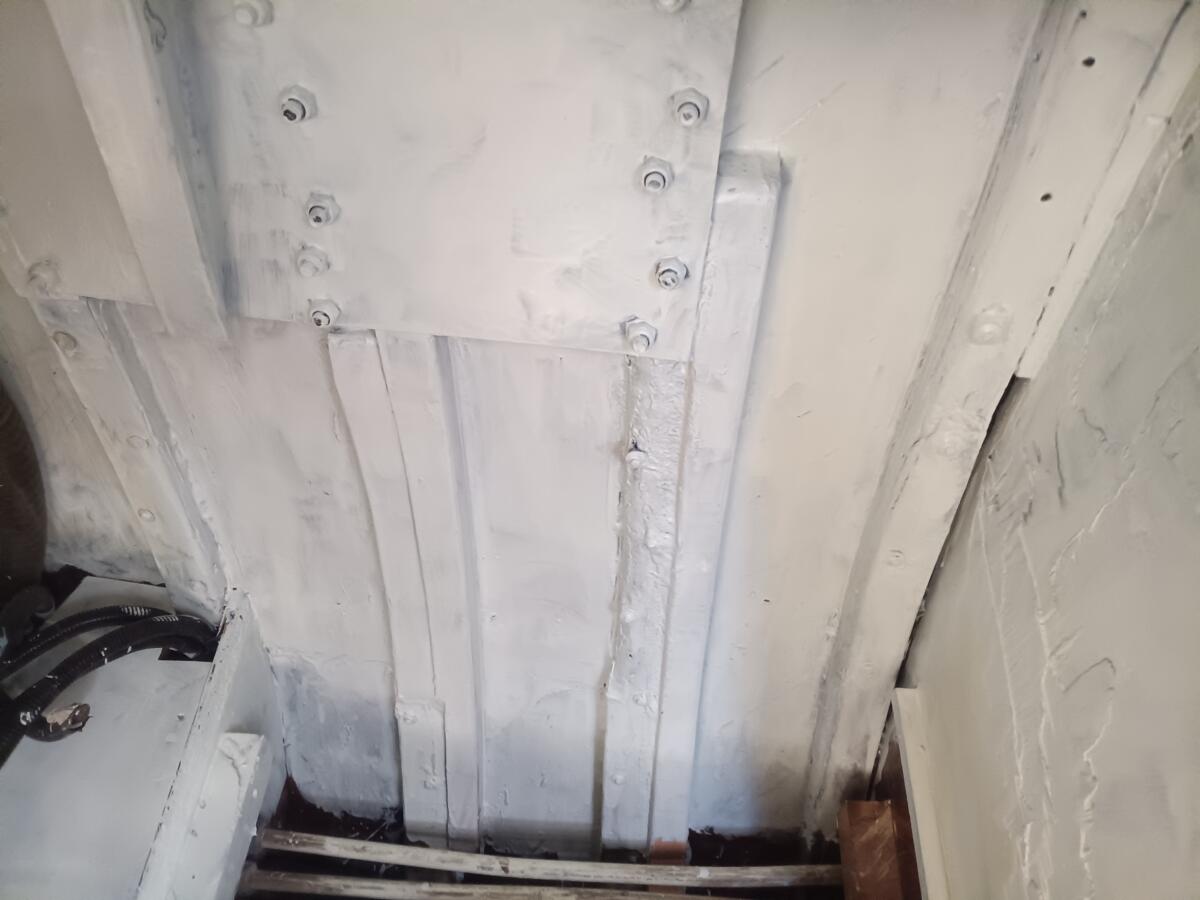
But what about the burnt frames and the damaged diagonal planking? At the worst point, the first of the three planking layers had burnt away completely, while the second was visibly charred. The heat had been so intense that the copper rivets had left visible marks on the outside, despite being protected by an 8 mm layer of mahogany.
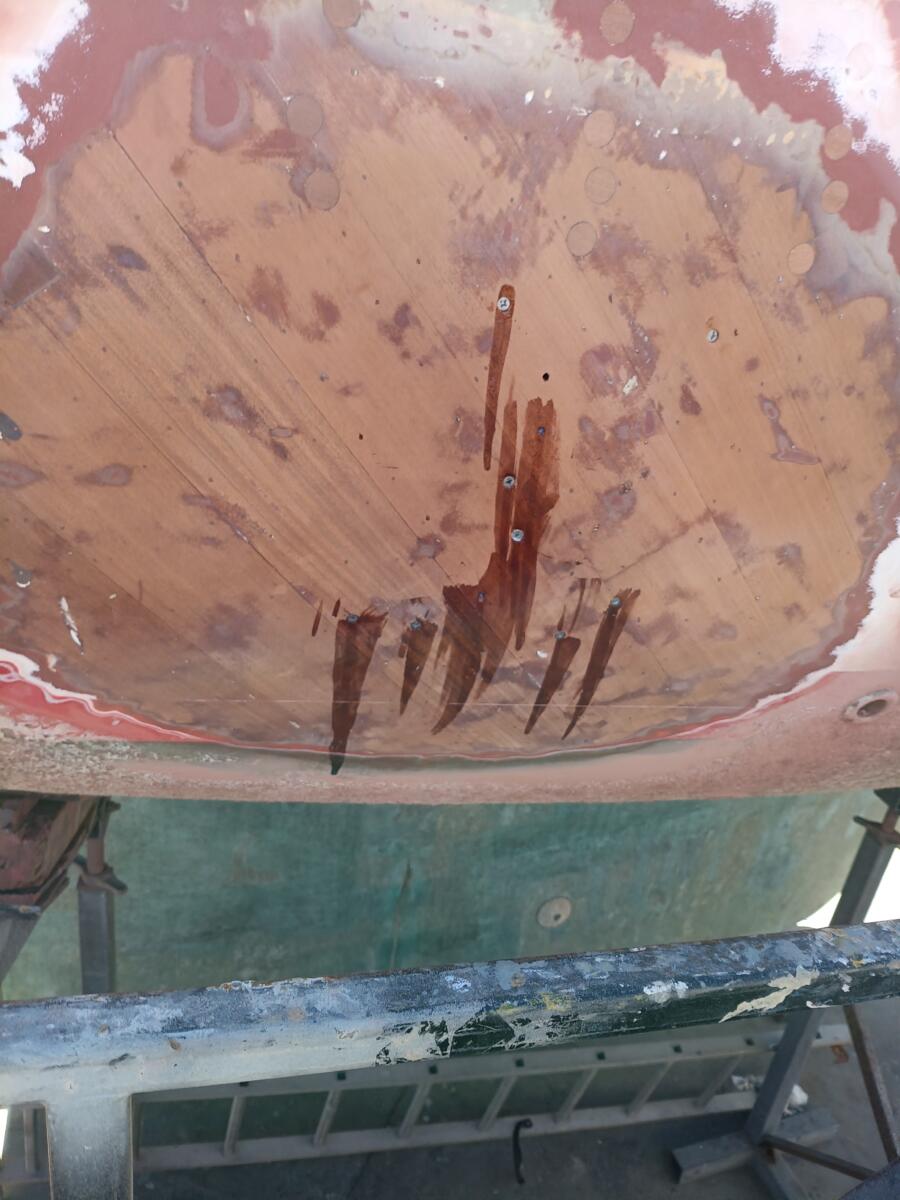
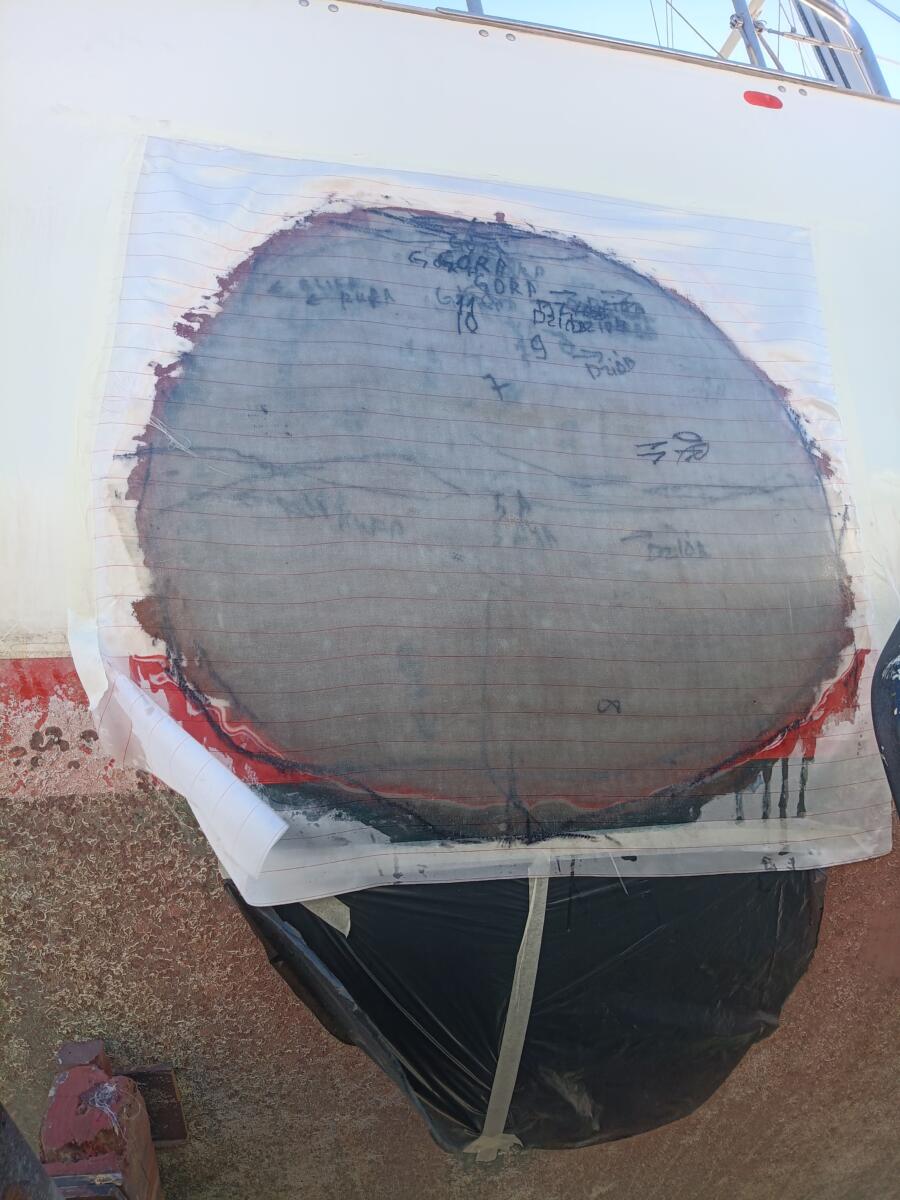
First, I removed the charred material. Then, using WEST SYSTEM epoxy, I bonded patches made from two layers of 6 mm plywood to the inside of the hull. Next, I cut reinforcing frames from solid timber and secured them from the outside with a series of screws. Even that did not give me complete peace of mind. Mahogany exposed to such high temperatures could have become brittle, so despite the reinforcement already in place, I decided to add an external patch of fibreglass cloth, laid up in 11 layers with a total glass weight of approximately 3,500 g/m².
Only after the laminating work was complete could I confidently assure the owner that the repaired section of the hull side was no weaker than the rest of the hull.
The temporary repairs were done. The next step was in the hands of the electricians, who had to bring the navigation systems back to life and get the essential equipment up and running.
With the yacht prepared for the journey, the owner gathered the crew and set off in the opposite direction to the one originally planned. Instead of sailing around the world, he headed for the yacht’s home port. And that was where there was a real chance of restoring her to her former glory.
To be continued.